

© 2026 Robert Sickles
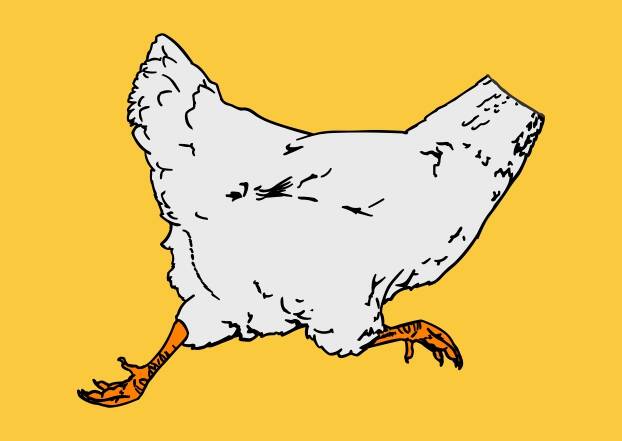
In the 1940’s, Mike the Chicken became a popular attraction around America. Somehow, Mike survived for 18 months after being beheaded by Colorado poultry farmer Lloyd Olsen. Apparently, a chicken has enough power in its brain stem that the head isn’t required for its body to function. You can look up the story if you want to know all about Mike.
Clever Hans was a performing horse. In turn-of-the-century Germany, Hans amazed onlookers by clomping his hoof to solve arithmetic problems and answer other questions. The “Clever Hans Effect” was named by a psychologist who determined that the horse was not really a math prodigy, but was merely responding to his trainer’s unconscious body language cues, such as subtle changes in breathing or the blink of an eye. It’s something that can explain the “brilliance” of many pets as well as the tricks of some mind readers and fortune tellers.
Joseph Pujol was a 19th century Parisian fartist. No, that’s not a typo. I mean to say he performed a comedy act that included his unique knack of controlling his flatulence, and he actually played little farty tunes. A virtuoso, he was hailed.
These are among the stories in the 1980’s book Learned Pigs and Fireproof Women. Author Ricky Jay was an American magician and actor who cataloged an amazing number of unusual performers. He regards true genius and charlatanism with equal attention, and includes many photos and images of quaint old promo posters. These were from days when sideshow performers, human anomalies, animal trainers, mind readers, and daredevils made the rounds to circuses, county fairs, vaudeville stages and street corners to impress—or hoodwink—anyone who’d pay a nickel to see something astounding. Way before people started lying around watching Tik Tok, crowds would actually venture out to witness humans and animals perform feats of skill and endurance—people who swallowed things, stood on coals, escaped locks and chains, slept on beds of nails, and pierced their bodies with knitting needles. Animals made music, danced, rode bikes, walked the tightrope, and dove from great height into pools.
In a similar but creepier vein, The 1961 book Strange People by Frank Edwards details individuals with very bizarre "believe-it-or-not" stories. There are oddities like the individual who was officially pronounced dead many times, always coming back to life; or the case of spontaneous human combustion, or the one who survived after falling out of an airplane. Edwards tells the stories of people who lived with rare conditions or who had abnormal births, like the conjoined twins Chang and Eng, the original “Siamese” twins who performed skits and stunts in P.T. Barnum’s show. Not only were they popular and well-off entertainers, but they married two sisters and raised large families in two separate houses. Hard to imagine! The book also contains accounts of incidents of extrasensory perceptions and uncanny predictions, especially the profound ones that occurred just before death.
So, why do I bring it up? It’s just me, and I probably stand alone here, but I have always been fascinated by eccentric characters. And I appreciate ingenuity, even of the guy who takes his headless chicken on the road so people can watch it bump around. Some of the best stories in these books are about people who overcame disabilities and lived a fulfilling life or found an audience to applaud them. Credit goes to the ones who studied hard and practiced to develop tricks and stunts. In hard times, enterprising one-man acts managed to make a buck.
In the 50’s, Dad took me to the big Ringling Bros. Barnum & Bailey Circus in Manhattan and we strolled through the side show. It was cheesy and tacky, but I had young eyes. Among the many attractions, there was a man with no arms who could do everything with his feet, a little family of little people posed in a little house, and a giant snake-charming, sword-swallowing, tattooed, bearded woman. These performers were, presumably, willing to exhibit their talents and received compensation for it. In those days, there probably weren’t many other occupations open for some of those folks. I think there is a distinction, then, from “freak shows” where unfortunate individuals are shown in the worst light to amaze or shock audiences.
Joseph Merrick, for example, was the 19th century Londoner called Elephant Man who was kept in cage, treated cruelly and displayed as a grotesque creature. Merrick, portrayed as saying in the movie, was “not an animal” but had an affliction that made his skin and bones severely deformed. Like most people today, I am not comfortable with the idea of gawking at deformities, and I especially condemn the exploitation and abuse that comes with it. So medieval.
There isn’t one, but if there has to be a point to this story, I guess I can suggest that we are all eccentric characters to a degree, maybe just not willing to admit it or let it hang out. Come on, get on that stage! You go first, I’m right after you… I promise. This is way more fun that karaoke! You want people to see that weird thing you can do… and I bet they’ll pay a nickel to watch it. Think of all those nickels!
Add comment
Comments
Robert enjoyed this piece by the way I’d like to share that last summer. My wife and I both being huge Andy Griffith fans spent some time in Mt. Pilot , North Carolina, and visited the Andy Griffith museum there. Across the street was another museum, devoted to Chang and Eng. The two sisters they married were from the Mt. Pilot area. If you’re ever in that area I would highly commend both museums to you.
"Remember, you can't trust everything you read on the internet" ...... Abraham Lincoln
Very fun essay, Bob. I appreciate the research that went into it. I'm especially intrigued by the Parisian "puff" artist with a very apt name, if Pujol is pronounced "pooh-hole".