

© 2026 Robert Sickles
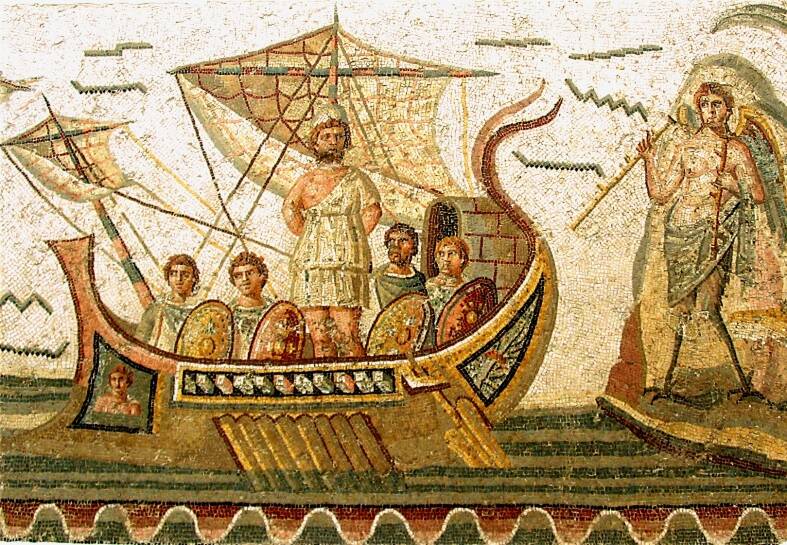
An elderly acquaintance from way back was working on his autobiography and called me up out of the blue to ask for help remembering some travel we shared. He struggled for half an hour trying to get my help with his vague recollection of the particular event—where, when, and what happened, and was it ’72 or ’73, and whether it happened before or after that other thing we did. Getting his life sorted in chronological order was clearly going to consume his time for the rest of his days. I couldn’t really help him, and ended the call by wishing him well with his writing. I know the guy, I think he’s unlikely to finish the book, lost in the trees as he is and missing the forest. But I could tell that this exercise was probably less about writing a book and more about organizing his memories before they fade away.
As you may have guessed, the topics for my stories come to mind randomly, and I present them as such. I shudder at the thought of organizing them in proper order like my friend was aiming to do. That’s because my life, especially early years, has been less like a string of evenly matched pearls and more like a mobile made of odds and ends found on the beach. Yes, everything is connected and cleverly balanced, but not in a linear sense. Nowadays, writing memoirs makes my past, present, and future collapse into a very flat stack of pancakes, where time and space don’t matter.
Named for the arduous journey of the Greek king Odysseus from Troy back home to Ithaca after the Trojan War, an odyssey is now understood to be any narrative that wends its way through a mix of adventures and mishaps. It can be a tale of a hero’s journey, or simply stuff plucked from the diary of an ordinary person’s lifetime; it’s the delights, detours, and dilemmas that make for good storytelling. There are always lessons to be learned. Since we all share the experience of living in an odyssey to some degree, we see our commonality in the writing of fellow travelers.
The main character in Kurt Vonnegut’s Slaughterhouse Five is Billy Pilgrim, who writes a letter to the newspaper editor, claiming that he has become unstuck in time. As the story unfolds, you watch Billy’s life in random vignettes, as though Billy is actually bouncing around in his life experiences out of sequence, never knowing each morning which chapter of his life he will live that day. One time he’s a U.S. soldier held prisoner in Dresden in Nazi Germany, another time he’s on his way to a convention of optometrists when his plane goes down, then he’s abducted and taken to a distant planet to be observed by an alien society. A beginning is not required, and even his death is not the end of his story. It could be a psychological coping mechanism for his war trauma, but rather than resulting in a kind of psychosis, Billy Pilgrim’s odyssey, regardless of what order it is experienced, shows that the beautiful whole is greater than the sum of its parts.
As I write my memoirs, I am living, or call it reliving, my life out of sequence like Billy Pilgrim did. One week I’m enjoying my grandchildren growing up; then I’m hitchhiking the California coast highway; next time I’m an eight-year-old boy heading to summer camp; then a young man working in a research lab; and then I’m having a lark making cremation arrangements for “when my time comes.” OK, I embroider a little, maybe conflate some events to make a good tale. Naturally, there’s some introspection as well… otherwise, what’s the point? I believe it’s my take on things that’s the fun part, not just the facts themselves.
My odyssey, unstuck in time, is the way I travel from Troy to Ithaca.
Add comment
Comments
Nice post, Robert.
I look forward to every story, Robert!