

© 2026 Robert Sickles
There are places I remember
All my life, though some have changed
Some forever, not for better
Some have gone and some remain
—John Lennon
Boom Towns
Like all the western states, Washington has had its share of boom towns—many survived, some made it big like Seattle and Tacoma, while others saw their light blaze up briefly, but flicker when the wind changed, then snuff out.
The city where I live now, Olympia, has some things in common with the town I moved from 18 years ago, Kirkland. Founding fathers of both Washington cities had high hopes of becoming major urban centers back before the 20th century. Both were thwarted by railroad companies that didn’t build the necessary rail links. And both cities are situated on bodies of water that were not suitable for deep port shipping. Despite grand ideas for their futures, I believe, it’s for the best that things didn’t go as planned.
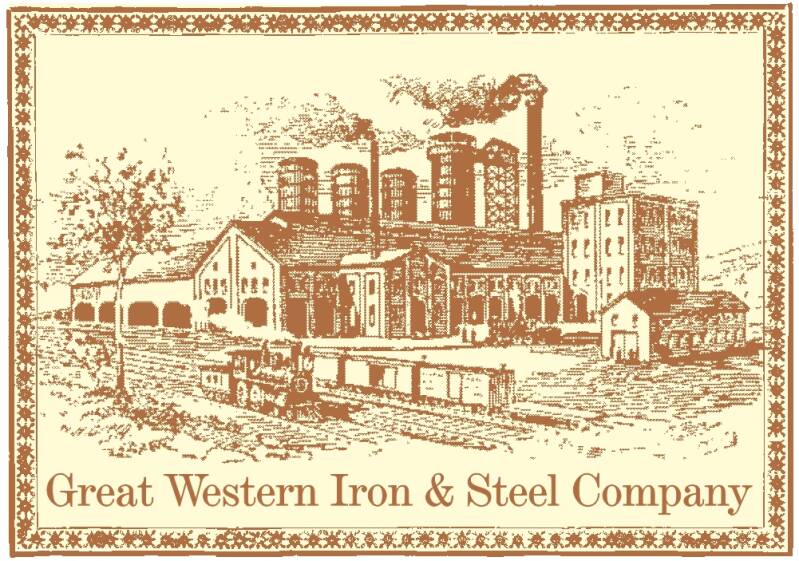
Kirkland was founded in the 1890’s by Peter Kirk who came from England with the idea of building a steel mill that would give rise to a West Coast industrial city. He thought he could beat Pittsburgh’s prices for high quality steel to supply Western railroad construction. Iron ore, limestone, and coal had been discovered in nearby hills. All Kirk needed, besides massive investment capital, was a commitment from the railroad company to build a spur line to his mill, and a port with access to the sea. Kirk founded the Great Western Iron & Steel Company and acquired land for the town on the eastern shore of landlocked Lake Washington, trusting that a ship canal would be built to connect the lake to Puget Sound. All looked very promising and investors lined up. Streets were platted and construction was underway for homes, churches, schools, and commercial buildings, expected to support a large population.
But Kirk got hit by multiple curses. The railroad companies, reeling from a stock market panic, failed to complete a rail spur. Then the coal and iron ore turned out to be not as plentiful as predicted and requiring expensive mining operations. Plus, both mineral resources were substandard for the best steel production. Finally, the stock market slump finished off his investors. The mill was never completed; machinery was left to rust without ever having produced a single ingot of steel. Kirk returned to England. And in the end, a small Victorian village for a few hundred residents was the only thing to show for his effort.
Kirkland was saved from extinction by the completion of the ship canal in 1917 and the establishment of Lake Washington Shipyard, where thousands of workers built and repaired all kinds of ships and ferries. Even after the shipyard closed, ferries and then bridges connected Kirkland to Seattle, making it a popular bedroom community.
Most people in modern times are thankful that the steel mill never got going, otherwise the pleasant lakefront suburb would have become just another rust-belt city upon the shore of a polluted lake.
Olympia is situated at the southernmost reaches of Puget Sound. Its harbor requires frequent dredging to allow only medium-sized ships to reach the piers, so even though city leaders in the 1850’s had a great hope for Olympia, the port would always be limited. They also expected the railroad to build the main line right through town. It would open the city up to markets for the region’s resources, propelling Olympia into the big league. There was abundant timber and seafood harvesting. Businessmen envisioned prosperous mills, canneries, wharves, and warehouses.
The city did have its bustling heyday, but again, the failure to secure a rail line kept the city from that vast success everyone was expecting. A short freight rail link was eventually built with private investment, but the big opportunity had passed by. Lumber mills and fishing fleets were located in other cities, while Olympia was saved from becoming a haggard metropolis and suffering the blight that comes with industrial growth and decay.
You can tell I’m a slow-growth sort. I like old streets of old towns that don’t change much and don’t get bulldozed for cloverleafs, malls, and high-rises. But growth is important for a city, so say the mayors and chambers of commerce. Both Kirkland and Olympia have boomed in a modern sense with sprawling residential neighborhoods clustered around clean industries.
Bust Town
Somewhere along Blewett Pass on Highway 97 in the Cascade Mountains, drivers usually speed past the little historical marker sign that points up a tiny road to a funky little row of dwellings and remnants, the town called Liberty. One summer, we finally decided it was time to take a look.
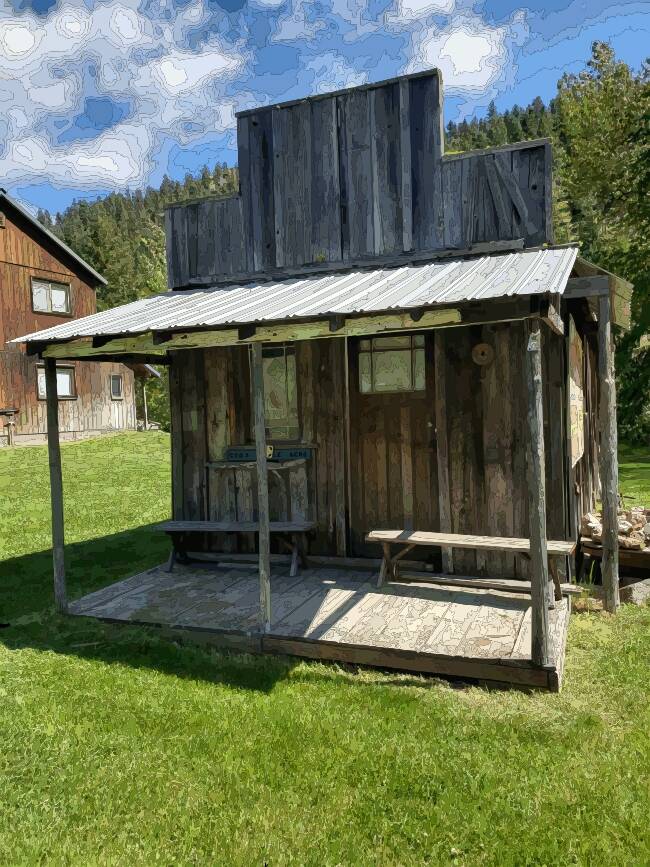
Liberty, about 150 years ago, was a boom town propelled by gold—nuggets, dust, and ore. Actually, the town never grew to more than a couple hundred residents. But now the population of 12 live in ramshackle plank and cedar shake houses nestled in the big trees. The village is old enough to warrant preservation by decree as a historical place. Everything is lined up on a single narrow road that dead-ends against a mountain ridge. Along the “outskirts,” a few larger spreads have old leaning outbuildings and some bedraggled livestock.
When you reach the “town center,” just about every small picket-fenced yard features a curio collection of mining equipment relics, ancient wagons & rusted Model-T’s, chainsaw art, and long stacks of cordwood. Front porches are decorated with every kind of hangy-doodle, whirligig and windchime that can jangle or dance in the breeze. Everywhere are pots of colorful flowers or garden beds bearing tomato and squash vines, little stands of corn, or peas in a row. That’s Liberty, cute in the summer.
While it looked quaint and funky at first, we became aware of old faces peering through tattered lace curtains, seemingly more wary than curious of gawkers like us. A sourdough-type gentlemen scowled from his front yard. Not many visitors here, and not much to stop and look at. A few old 1890’s commercial buildings remain with fading signage but no longer function as hotel, grocery store, stage coach office, etc. Other than reaping grants for historic preservation, I’m not sure what the economy of Liberty is. I would have bought a souvenir but nobody seems to be keen for tourist business. A ghost town on life-support.
Odd Places
There are two places in Washington State named Mock, one you can go to that doesn’t exist, the other exists but you can’t go there. Take a second to let that sink in…
An extinct town in Spokane County, Eastern Washington, Mock was a labor camp for immigrant Italian railroad workers, founded by W. C. Mock. You can drive by it, though it’s not much more than some fence posts and a dry field now. Remaining landmarks are a pair of stone ovens the Italians built for baking bread. Mock is a ghost town situated near Rodna, also a ghost town, and the sparsely-populated hamlet of Amber. If you look up Amber, Washington, you will mostly find social media pages of the surprising number of young women named Amber who happen to live in Washington.
Mock City is the other one—you can find Mock City on a map, but you can’t visit it. It’s on Fort Lewis Army Base, and is where soldiers train for urban warfare. On an aerial view map, it seems to be a collection of structures that resemble town buildings and homes, arranged around some streets and other features. It reminds me of a movie set, all false-front and make-believe.
Mock City is not far from the artillery practice range in Fort Lewis, making it a less-than-ideal place to live, if it were actually a place to live. Newcomers to the South Puget Sound region always have to ask someone what’s going on when they hear and feel the occasional booming of cannon fire, night or day. Even from 30 miles away, our windows rattle, and pictures hang crooked on the walls. Is it an earthquake? Are we having a thunderstorm? No, today it’s the howitzers! People who live very close to the base either support the troops and love the “Sounds of Freedom” or later realize why their real estate agent neglected to mention this little detail.
The most curious thing, though, is that Google presents Mock City as though it’s a real town: “Mock City is a small unincorporated community and populated place located in Pierce County, Washington, near the town of Roy and Lewis Lake.” Also, Google shows places of interest and things to do when you travel there, with star reviews for hotels and restaurants. It even has a US Mail ZIP code. I spent an afternoon trying to figure out what the hell was going on, wondering if Mock City is a true travel destination, a mirage, or a joke. I don’t know why the ZIP code, but all of that tourism stuff turns out to be located in adjacent towns, just outside the Army base.
Dream as I may, I will never visit Mock City, but maybe someone could at least send me a picture postcard from that post office at 98580!
Add comment
Comments
Happy birthday!I do enjoy your missives!
Happy Birthday to a great writer and gentleman!
I just recently put two and two together that the Kirkland brand at Costco was named because the first Costco was in Kirkland!
And Happy Birthday. Again.